What are Parts and what should I do with them?
Psychological Parts

Intro
This article speaks to what is meant as our “parts” in the psychological sense. Some therapists approach these “parts” in a more general context, understanding that we are all made up of different aspects of ourselves and our psyches. IFS or Internal Family Systems has a more specific framework when it describes parts, it holds that parts have their gifts, thoughts, emotions and feelings (in the body) . Overall parts are seen as aspects or sub-personalities of our overall psyche. As the name implies Internal Family Systems views our psyche as a group of individual parts like the members of a family make the family. Through more than 20 years of therapists working with people and their parts it feels safe to say that we all have parts.
I have come to see my parts as different aspects of my ego. My parts make up all of me that it isn’t eternal, the me that has always been there and always will be; the Self. I have parts that believe things about me, about the world and about how best to navigate and protect me from threat. Parts can have their own thoughts, emotions, beliefs and bodily sensations. We experience what our parts experience.
I find a good way to help people understand parts are through examples. When we feel conflicted inside, that is an example of two or more of our parts not agreeing on something. When we feel two parts of us with a strong adversarial relationship or intense difference of opinion it can be like they are waging war inside of us, IFS calls this strong internal conflict polarization. We can also experience less intense parts disagreeing, one part of us thinks you should buy the bag of chips because it feels good and we like them another part believes it’s a bad idea because it’s not healthy for us. One part of you loves and adores your husband, wife or partner and another part gets pissed off with them when they leave the toilet seat up.
Parts are not the Burdens they Carry
Before I say more about parts I need to talk a little about burdens as they are key to understanding parts, especially Exile parts.
In my article about Defences, I shared about parts of us that weren’t able to handle heavy traumatic or ongoing traumatic experiences. Burdens are the strong self-beliefs, thoughts, emotions and memories stored in our bodies that we took on when something was too much for us to handle. A burden can be a belief that we carry about ourselves like “I am unlovable”, “I don’t matter” or “I am evil, bad or am a burden to others”.

A burden can be a belief that we carry about ourselves like “I am unlovable”, “I don’t matter” or “I am evil, bad or am a burden to others”. A burden can also be a perspective or belief we take on about the world or people; “The world isn’t safe” or “people will just let me down so what’s the point”. A burden can also be the feeling of terror in our bodies that we can’t shake or get rid of, a memory or vision of a terrifying experience like abuse or a car accident. Burdens can show up as a sense that you are worthless, that nobody wants to hear about you, what you feel or think.
When we are young, we aren’t capable of discerning the truth of what adults tell us. We take them on as if they are true, they form and organize our psyche, which in turn forms and arranges how we approach and live life. John Bowley who pioneered much of attachment theory described the impact of our burdens as affecting and shaping our “internal working models”.
Legacy Burdens
There is another type of burden that is called a Legacy burden which doesn’t come through our own experiences but through the generational experiences of our families. These could be directly from our families or the social/cultural environments we grew up in. We learn or absorb how to keep ourselves safe, from members of our families or communities. Bowen family systems developed by Murrey Bowen contributes a lot of understanding on how the environments we grew up shape our behaviors, thoughts and defenses, more on that in another article.
An absolute core understanding for parts is that they are not their burdens. Our parts may take on our burdens, but they are something more. Just like people, we are not our mistakes, our thoughts, our judgements, we are so much more.
Different Types of Parts
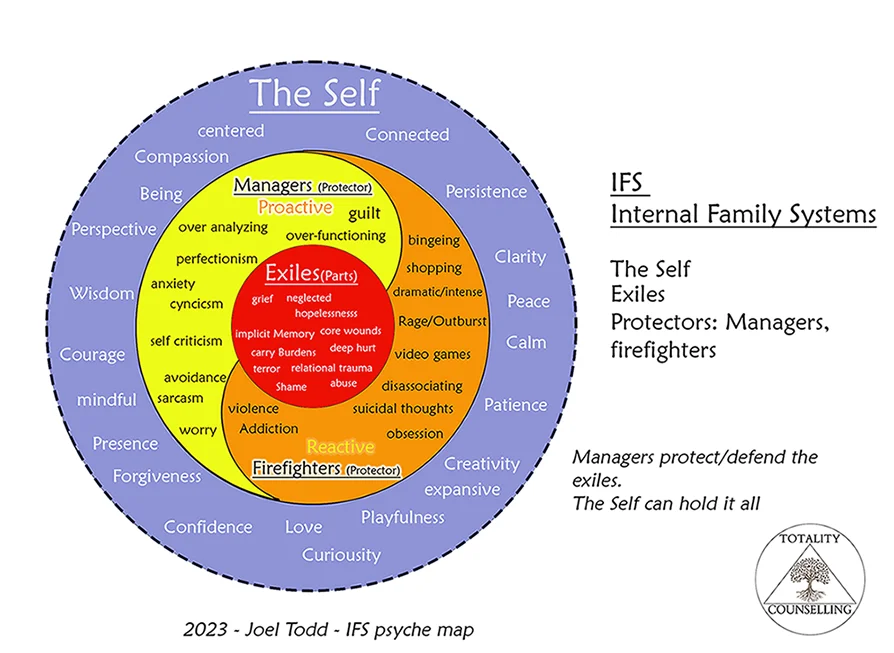
Exiles
Exiles are the parts of us that carry the burdens, from our past. They have locked themselves up with the burdens, to keep us safe from them. These burden generally are so locked up, they get pushed away and stay stored in implicit memory, the unconscious part of our minds. Until these exiled parts feel safe enough, we completely forget or put out of our minds the horrible experiences we endured. As we calm our protectors or defensive parts it creates space for our exiles to come forward, to feel safe enough to be seen and nurtured. This is why during therapy old memories will often resurface, when enough safety is created our systems trust that something is different. The feeling or experience of safety is a key component to healing. As our exiled parts feel safe these memories can come forward into our conscious minds where with guidance the neural networks of our brains can be regulated (calmed), which rewires them in positive lasting ways.
We cut off or lock away these parts of us so they don’t hurt us, overwhelming our systems. I view what many call “Inner Child Work” as the same or at least very similar to assisting these exiles to release or put down the burdens they carry. When they are freed from their burdens so are we.
Protective Parts
There are two other types of parts, these parts have taken on the duty or responsibility of defending or protecting these vulnerable exiled parts. They fear that we won’t survive if they don’t keep up these defensive behaviors. Protective parts or protectors become the overly protective parents to our vulnerable exiled parts. Like over protective parents they all believe they are doing the best and right things for us. Like parents in a family, protectors don’t always agree on the best ways to take care of us. These protectors can’t see the big picture of our lives, taking everything into account, like the Self can.
Often there is a lack of trust between our parts, they argue and fight inside of us. All our parts have good intentions for us, even when they are keeping our destructive patterns going. IFS see’s our thoughts, beliefs, negative emotions and bodily sensations as actions taken by our protective parts.

There are two types of protectors, in IFS they are called firefighters and managers. Manager parts are the parts of us that manage our internal defences proactively. They use our thoughts, emotions, thought patterns and bodily sensations to steer us away from potentially upsetting situations, to “keep emotional pain out of consciousness”. If something gets past a manager, we have reactive protector parts that IFS calls firefighters. They rush in to make sure we aren’t overwhelmed (our nervous systems) in more drastic or intense ways. Firefighters can have us acting more destructively towards ourselves or others in the short term with things like addiction, bingeing, numbing, disassociating and thoughts relating to suicide. Managers are usually are more subtlety destructive, over time influencing us into patterns such as over-functioning in our relationships, perfectionism, keeping up appearances and avoiding conflict.
All our parts Exiles, Managers and firefighters, feel they must fulfill their roles to keep the system safe. These parts of us can have their own emotion, thoughts and motives. While exiles and managers often are more fearful (passive), firefighters defend us more through aggression, at times becoming enraged at the injustice of the traumas we’ve experienced.
Stuck in Time
Most exile or protective parts get frozen in the time of the trauma that they carry or protect us from. They don’t understand that we have moved on, that most of those threats aren’t relevant to us anymore. Often when I am working and dialoguing with a part of a client, they see themselves and the client as very young. These parts of our personality don’t realize that we have grown up, that we aren’t in the same danger as we were in the time that they are stuck in. While it’s not to be rushed with parts, often one step in helping parts relax is to show them that we are no longer young and defenceless like they believe themselves and us to be.

The Self and our Parts
One thing that is true of all our defensive parts is they don’t trust us to take care of ourselves. As we get to know these parts and their struggles, we re-establish a trusting relationship between them and us. They learn to trust that we aren’t young and vulnerable anymore, that they can move back into roles within us that support us rather than restrict or damage our lives. The Self has the wisdom, compassion and understanding to help all our parts come together, back in an integrated whole. The Self brings love, acceptance and understanding to all parts, allowing them to step back and to let to our brilliant shine.

Some Examples of Parts
To finish I want to present some examples of how our parts can operate within us. Examples seem the best way to relate to parts and how they show up. Parts will often battle other parts inside us, they believe they must protect us from the old threats at any cost; unable to see the larger picture of our lives.
The first example of how our parts might impact us involve addictions, the destructive use of substance to numb us before we feel too much. Many see addiction as a character fault, a failing of a person’s willpower, a weakness. As a society, we judge ourselves and others for not having the strength to decide to stop our addictions, as if overpowering them is easy, simple and straight forward. From an IFS perspective people struggling with addiction have parts that use addiction to numb the potential overwhelm that other parts carry. Often following the addictive behavior, are shameful feelings about them. This shame is another protector part defending something very vulnerable inside us. As the conflict and distrust builds between these parts it creates massive turmoil internally and externally for us making things harder and harder. The shame of being told we should just get over or past it is another thing that can contribute to these cycles. Upsetting or enraging protector parts.
Here is an example of how our parts take on these defensive roles starting in childhood through our relationships with our primary caregivers. It might start with our parents having a lot of their own anxiety (parts protecting them) and emotional triggers (protective parts). Our parents are triggered and get upset and take it out on us directly or indirectly by withdrawing their love and support from us. As children we blame ourselves for how our parents are treating us, we don’t have the capacity yet to know any different. As children we are adaptable and learn that if we bury our hurt, sadness, and softness we can become whatever keeps our parents happy, maintaining the relationship with them, ensuring our own survival. All the things we become that isn’t really us, are the roles and behaviors that our protective parts take on to defend those soft parts of us that are hurt and sad, our exiled parts.
As children we might learn to act happy all the time so we don’t stress out our parents (avoid triggering their parts), this acting happy behavior could be how a manager part proactively protects us. As children we might also create reactive firefighter parts that get angry and push our parents away. By pushing them away we avoid the feelings the exiled part carries, the burden of not getting the love, acceptance and connection from our parents we crave. As we push our parents away, it might trigger their own protector parts, it might show up as them getting angry or pulling away more and more. This is how they defend their own young vulnerable parts that never had the safety to release their burdens.
As you might expect this can become a cycling pattern of triggering going back between two people, it shows up in all our relationship including parents and children, romantic partners, coworkers and friends; each person’s protective parts are trying to protect the soft parts locked inside.
The last example of how parts can show up is what’s is called a legacy burden. Legacy burdens are the burdens we take on through our families, and the cultures and societies we grow up in. If our families suffered through famine or poverty, we might carry the belief inside us that no matter how much we have materially we always need more. If our family experienced persecution because of beliefs or the color of our skin we might take on the burden of never feeling safe in the world, like the world is out to get us. Legacy burdens can come down through our family and cultural systems either by absorbing them through the bodily sensations/memory that are carried in the family, or through witnessing or being told about the persecutions.
Even within the safest of households, where children never hear a negative word directed at them and the caretakers can hold their own triggers, children still take on these deeply seated burdens or beliefs. We are all affected by these protectors through our emotions, thoughts and bodily experiences more than we realize. However, children are completely driven by these somatic or bodily realities. Their brains haven’t developed the cognitive abilities to discern their own truths and they aren’t able to create their own safety in the world. Children rely on adults to help them navigate the world, regulate or feel safe within their nervous systems.
Parts can be Sneaky
One sneaky way these defensive parts can show up and sabotage our relationships are when we see our own defenses mirrored in others. Children might just be the best mirrors for parents’ triggers or defenses. How this works is something like our children or partner get mad or sad. In the presence of this angry and sadness we get uncomfortable (our nervous system is triggered) this gets the attention of our defensive parts that take some action to push down the memories (in our minds or bodies) of our own unresolved sadness or anger. To defend our vulnerable parts inside, we might find ourselves trying to distract them, change the subject, or getting angry with them.
At some point it wasn’t safe for us to feel angry or sad and the experience of seeing someone else in those emotions trigger our protective parts. We can notice this in ourselves by starting to pay attention to what happens for us when we are around someone who is angry, crying or expressing sadness. Are we comfortable with their upset or sadness, do we try to distract them, do we get upset with them or try to change the subject? Any behavior, thought or feeling that is trying to get us out of the uncomfortable experience we are having in the moment, is a protective part of us trying to protect some vulnerable part of us that never felt safe. As we learn to calm these protective parts, we will find we can be more present for the upset in others which will support them in being with their own vulnerable parts. For many people working with a relational therapist can be the first time they have ever truly felt safe in their lives. This safety with another person can be what we need to create our own internal safety. More internal safety is key to reducing our triggers and defenses which leads to a calmer, more rewarding and fulfilling life. Opposite to how these vicious internal and external cycles are created by our protector parts, we can create internal supportive relationships inside our systems leading to a whole new experience of life.
What can we do to support our parts and calm our defenses?
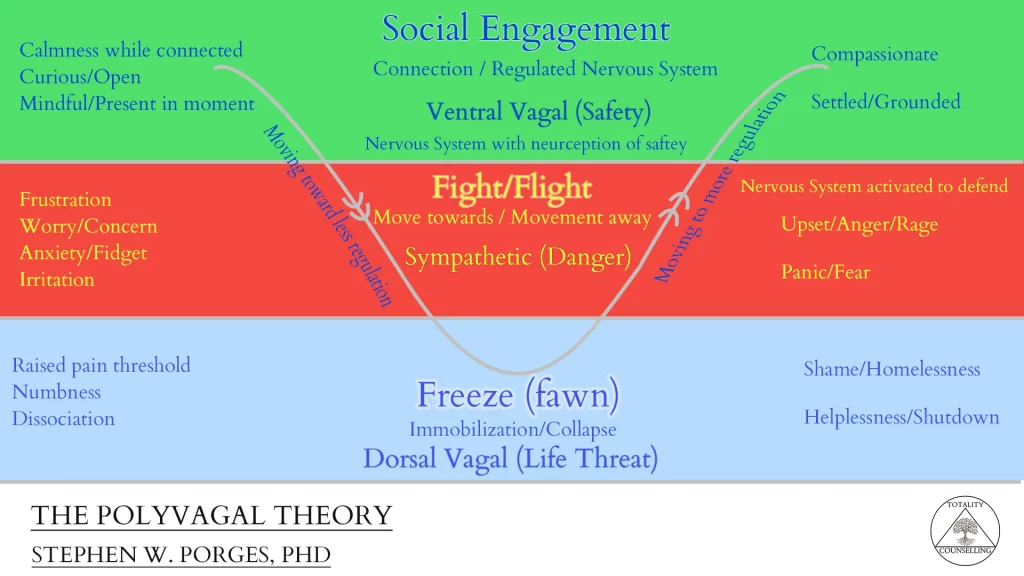
I mentioned a number of things that can help to calm our protector parts at the end of my article about the Self. Anything that helps us learn to regulate our nervous systems can be supportive in calming our protective parts. Creating a new relationship with our different parts will change our internal lives thus changing our external lives as well. In my post “Getting to Know a Part” there is a recording that leads you through a brief experience of learning and connecting with your parts in a new way. As we bring curiosity and a willing to understand these parts of us, they start to relax some of their defensive behaviors. Seeing our defenses as something outside the core of who we are is the first step in creating something new with our parts. As we take steps to understand and appreciate these parts they start to relax and soften which creates space within us. More space within us leads to have a new experience of life, a better experience of life.
Working with a therapist who understands how to work with your parts and teach you how to work with your own parts will be the fastest and most beneficial way to transform your relationships with your parts and transform your life.