A Process of Change
This is the 7th of 7 Articles in the Series “A Process of Change”
With this article I wanted to broadly lay out some of the core aspects of change or transformation, as I’ve come to understand and experience them, both for myself and with my clients. I am going to attempt to keep it concise; being such a broad and nuanced topic I won’t be able to address many aspects of it, however I aim to bring together some of the major components. Personal change or transformation is such a core aspect of my life and my purpose. Both as my own personal transformation and having the opportunity to guide and witness transformation in others.
My hope is that by sharing here with you, you come to understand and relate to change in some new and meaningful way. It seems to me that life itself is change, we are all changing all the time, our lives as human beings is our chance or opportunity to evolve. Evolution is happening, whether its conscious or not, is up to us.
How we experience Life Day to Day
I thought it would be helpful to lay out a general basis of how we experience life day to day from a therapeutic perspective as I understand it.
It starts from birth; we enter life with an aspect of us that is forever and unchangeable. It is an ever-present love and safety; it is our Core, our Self. This Self never goes away but we can lose contact with it, for many it becomes overshadowed by our survival thoughts and emotions.

When we are born, we are highly emotional beings, we navigate the world emotionally rather than emotionally and mentally, until around the age of 10. Either we are good (happy, joyful, amused) or upset (sad, hungry, uncomfortable). We are completely reliant on our parents for this first part of our lives.
Starting from birth we begin creating an internal model that sits on top of our core self, this model aims to keep us safe physically, mentally and emotionally. We use this model to relate to, to understand, to make sense of, and to navigate through the world, our entire lives. This inner or internal model is like our subconscious guidance system. This model is stored in our memories as a combination of emotional experiences paired with their associated thoughts. These memories are made up of every experience we have had, whether conscious or in our subconscious. This internal model is constantly updated by every emotion or feeling, every thought we thing, every interaction and by our awareness of all of them. The base or core of this inner model is largely influenced when we are growing up, by the mental and emotional environments we are in, the thoughts and beliefs of our families, our cultures and communities. Additionally, we inherit stored memories through our family’s genes, like a starting point or blueprint to our internal model, this is an aspect of epigenetics.

When we are young, we learn to relate everything inside and outside of us, in relationship to us. Meaning; if something happens that we learn to interrupt is bad or negative, usually through feedback from trusted authority figures, we associate it to mean something we did was bad or negative. We don’t have a concept of us and others being distinct or separate from each other. Due to this when something “bad” happens we associate that as we did something bad, potentially taking on the belief that “we are bad”. When we are young, we haven’t yet created the concept of “other” in our internal model, so everything feels like “us”. Many of us don’t ever learn that we are not our thoughts, emotions or what we do. They might be an aspect of us, they impact our experience of life, yet we are something more.
When we are young and largely emotional, we experience things as either safe or a threat. Taking in each new experience, our brains and nervous systems continue to update or add to our internal model. This model is continuously updated with each experience as a thought colored or filtered by the emotion experienced with it. We process the almost infinite amount of information coming in to our systems by grouping and organizing it into categories, we generalize new experiences and ideas with previous experiences. This internal model becomes our perspectives, perceptions and beliefs. Everything we feel, see, hear, touch, taste and smell is integrated into this model. As you might imagine, the people we spent the most time with like our parents, siblings and other significant people like teachers or friends of the family, influence our internal model the most. We are constantly experiencing life moment by moment through our feelings or bodily sensations, communicated to us as stimulus in our nervous systems. A vast amount of what we experience are old memories, recorded feeling memories, how we felt in the past in a similar circumstance. These feeling memories are grouped or organized with thoughts that our systems decide are connected. Our thoughts and feelings are grouped together for recall, in an effort to keep us safe. This is achieved through neurons being grouped by the pathways, created in our brains.
If we generally feel safe growing up, we will create an internal model that interrupts our experiences of the world, and of others, as generally safe. If we generally experience fear or threat growing up, we will grow up fearing or being cautious of the world, and of people. This is reflected as an easily triggered nervous system, and strong psychological defences along with many other emotional patterns that we use to keep ourselves safe. If we grew up feeling safe overall that will allow our nervous systems to learn we are safe in the world. If we had the opportunity to spend time with mature adults who felt safe within themselves, we will learn to model that experience within our systems.
An important point to all of this is repair, experiencing fear and some level of threat is normal and a part of life. The key is to learn how to navigate from fear back to safety within ourselves. One way we can learn that, especially when we are young, is by having a safe person to come back to consolidate that fearful experience. Resilience or the ability to handle or navigate challenging experiences isn’t built through a perfect safe life, it’s built by having safe people to connect with after the experience, to make sense of the experience, both in our bodies (nervous systems) and in our minds. As we evolve as a person, we can create this safety within ourselves to come back to, we build a trusting relationship with our Core Self.
As we continue through life this internal model filters or colors each new experience we have. Another way to think of it is as a set of rules, a list of strategies, or an algorithm we use to process each new moment. We mentally and emotionally compare new experience with all our past experiences, trying to find the best match or most similar match in our internal system. We then use the closest past match to decide how to feel and think in each moment. In a sense we are re-acting those past experiences, with the hope that it will keep us safe.
When we use these strategies, we avoid feeling our intense emotions, our system deems this a survival success. In a way we keep proving to ourselves that our strategies are good, all the while re-enforcing our beliefs and thinking that go with them. Meanwhile, through this process, the emotional energies stored inside of us become stronger and stronger. To hold these energies at bay, we build stronger and stronger internal defences. We do this though many types of strategies; anger or avoidance, behaviors that numb or distract us, anything that keeps us from having to experience the intense emotional energy connected to our fear or vulnerable feelings. Without an outlet for these energies, they grow larger and larger, therefore so must the walls we create around them.

While all this is going on inside of us, we are also creating these strategies or models in our relationships with others. We do this through the conscious or subconscious agreements we make with them. This starts right when we are born, some of these contracts are positive ones. These agreements might go something like:
“If you act this certain way, I won’t have to feel this thing that gets triggered in me, that I don’t want to feel. In turn, I won’t trigger you by asking certain things of you, I won’t express myself in certain ways. We will agree to avoid certain things, agree to create strategies together so we aren’t reminded of or re-live past emotional experiences we wish to avoid feeling”.
We create these relationship models within all our relationships, generally subconsciously. We create these strategies to keep ourselves from feeling what we fear might overwhelm us. We also strategize to avoid thinking in ways that trigger or are associated with the strong emotional memories stored in our internal model.
As mentioned before there is a positive or supportive side to all of this, our internal and relationship models can be updated to focus on re-enforcing the safe, joyful, positive memories and experiences. We can unlearn what we have learned. Our inner models can support us to make sense of our experiences, to feel safe in releasing our emotional energies, and to experience more love and safety instead of fear and uncertainty.
Once we become aware that all of this is happening, and we create some internal safety, we then have choice, do we keep re-enforcing our fearful past experiences, or do we choose something different? Until recently it was believed that after a certain age, we couldn’t alter our brains all that much, we now know that our brains keep their neuroplasticity as we age. This means we can change our brains and nervous systems, how we process and relate to our emotions and thinking, update our internal and relationship models. I see this in myself and my clients all the time.
If our life isn’t all we know it could be, we can consciously choose to look at how our internal model is operating and change it. We can consciously empower ourselves to something new, we can choose to create safety and joy for ourselves, and with those around us.

If are a visual learner like me, check out the children’s movie from Pixar called “Inside Out”, it does a wonderful job of describing much of this through film in an informative and fun way.
The Process of Change, Transformation and Therapy
Next, I will describe how I see the process of change as a therapist. While I use main stream therapeutic modalities in my work, I may describe how they work a little different than others. The modalities that I primarily practice with are AEDP or Accelerated Experiential Dynamic Psychotherapy, Parts work (IFS), person-centered therapy and Bowen family systems. These modalities are based in somatic therapies, experiential therapies, secure attachment, family systems, and transformational processes. They are all evidence-based, utilizing the wisdom of the past, in partnership with new wisdom rooted in neuroscience of the last 20 years.
There isn’t one path to change. This process that I am describing here isn’t linear. After all, life and our experience of it isn’t linear, even if it might seem like it.
A couple months ago I got it in my head that I wanted to understand the process of therapy in my own way. I like to deeply understand things and bring many different aspects together as part of my process of integrating them.
As I mentioned above this might be a different way to explain how change, transformation and therapy works than you’ve heard before. There is no need to agree with what I share here to benefit from it. The process works regardless of how much we know about it. Expanding our understanding and knowledge of something can be a great way to feel more comfortable with it, understanding replaces fear of not knowing. When the unknown becomes known, often it becomes safer for us.
A Process of Change Overview – Major Aspects of Transformation or Change
Here I offer a brief description of each major term I use below. Each of these Major aspects are addressed in more detail in separate articles linked following each description.
State of Being
"is whatever we are experiencing in any given moment, we might be upset, confused or joyful. We experience our States of Being through our emotions, we feel joy, confusion or upset as sensations in our bodies. Our nervous system is what creates those bodily sensations."

Read the Full Article - "State of Being – What is our Current experience of Life"
Personal Responsibility
"Taking personal responsibility for how we think and feel.  Personal Responsibility is a State of Being that is open, accepting and is key to transformation. We take Personal Responsibility one thought or feeling at a time, a moment at a time."

Read the Full Article - "Personal Responsibility – A Massively Empowering State of Being"
Awareness
"Both a State of Being and a tool to be used. Awareness is directed by our Will, it is our focus, attention, a light we shine to make the unknown known. As a State of Being awareness connects us to our Core Self. It allows us to step back from our thoughts, emotions, and experiences and see and experience them from a distance. As a State of Being, Awareness allows us to pause and then pivot into other States of Being. Awareness enables conscious choice instead of automatic reaction."

Read the Full Article - "Self-Awareness - The Game Changer"
Bodily Awareness
"By using our Will to direct our awareness to what we experience in our bodies, we gain understanding of how our emotions operate and how they react to the experiences we have in any given moment.  Safety is experienced and created in the body, through our nervous systems."

Read the Full Article - "Bodily Awareness the Somatic Experience"
Willingness
"A State of Being we can choose. A State of Being that is open to change, open to stepping back from our experiences, so we can experience something new. Our Will directs our experiences of life, and our awareness of them."

Read the Full Article - "Willingness – Harnessing the Power of Our Will to Choose Something New"
Beliefs, Perceptions, Perspectives and Context
"The inner model we create in our brains to navigate and make sense of our experience through life. Constructed through memories of the past, both emotionally and in thought form."

Read the Full Article - "Beliefs – Our Inner Model for Navigating Life"
Self – Our Core Self
"the aspect of us that has always and forever will be within us. The part of us that is Safe, Confident, Creative, and Courageous. Our core Self never leaves us, it is often covered up by our beliefs and psychological defences.


Read the Full Article - "The Self"
Here is how conscious or intentional change or transformation can happen.
Generally, we come to a point in our lives where we’ve had enough. We have struggled enough and we want change. This is the start of our Willingness, something in us opens up to change, anything to stop the amount of struggle and hardship we are experiencing. With this Willingness we do something new, we join a group, we start researching change online, or we start going to therapy.
From here I will describe how change might happen for someone who comes to therapy with me, no matter what avenue of change a person takes it will share some similarities with what I describe.
How change might Happen in Therapy with Therapeutic Counsellor
A person comes into their first session with me. I start getting to know them by asking them questions -about themselves, their families and what they are struggling with. I ask questions about their experience right in this moment with me. This continues through all our work together, I guide them to reflect and know their own experience, they connect with and become aware of their experience in the moment. I continuously check in to see if they agree to each step of the process, honoring their choice is vitally important to creating safety, a key to the process.
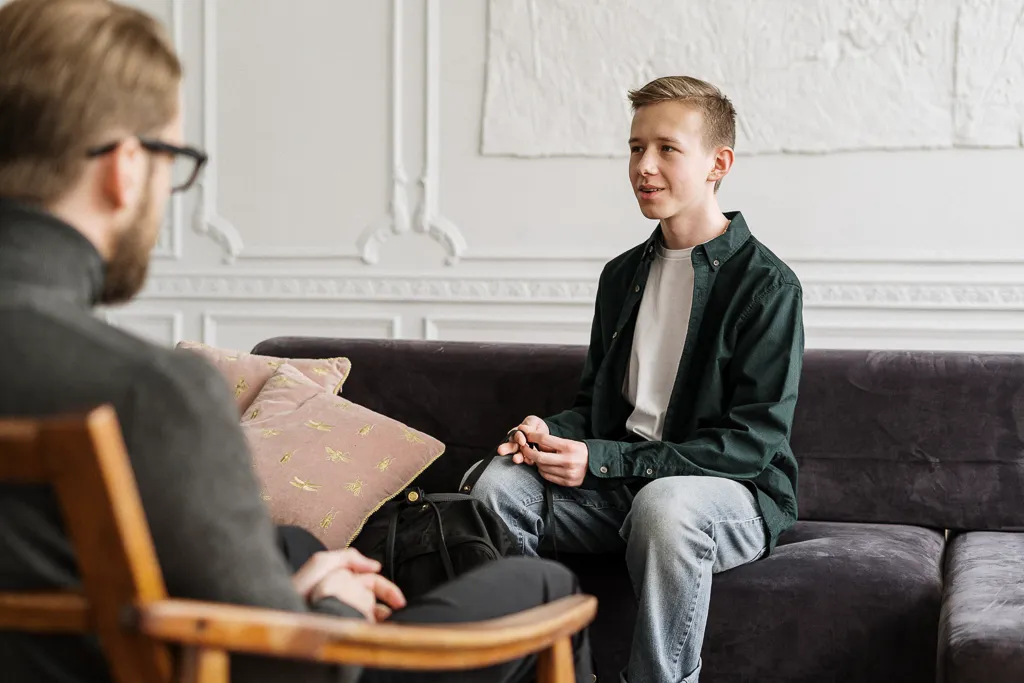
As a therapist who works somatically, I guide my clients into their own awareness of what they are experiencing in their bodies. I encourage them to use their Will, or focus on their present experience. Each client’s access to their inner agency, or ability to intentionally use or focus their will, will differ. With my support the client will practice using their will-power to take action and to bring attention to their internal system. Using their willingness and internal will they bring their attention or awareness to their Current State of Being, by noticing their bodily sensations. They learn what they are feeling emotionally, what their nervous systems are communicating to them from their brains. This can be challenging at first, most of us have spent a lot of time learning how to avoid feeling what is going on in our bodies. As we work together, trust and connection is built between us, it isn’t expected, again choice creates safety internally and in relationship.
Utilizing the connection formed between us, my clients learn to feel and experience the emotional energy flowing through their nervous systems. With my guidance they learn how to feel some of their bodily sensations (or emotions) without being overwhelmed by them. They learn to self-regulate the energies of their feelings. As they do this, they release some of the built-up emotional energies connected to past experiences stored in their bodies, as memories.
While this experience of sensations is happening, thoughts and memories are recalled in their minds, often they share and express these thoughts to me, sometimes they reflect on them internally. Thoughts and emotional memories are stored together, its natural as one is experienced and brought into awareness, others connected to them are also brought into awareness. As we explore the feelings and thoughts, we are discovering the internal and relationship models my client have created. The internal maps they use to navigate their lives. Through these explorations more understanding occurs, connections to why they created these inner systems become known, making the unknown known. All the while my client experiences a relationship model of safety, understanding and deep concern. They are able to witness, but more importantly personally experience a safe and supportive relationship.
Something that I will often guide my clients to do is to have conversations with the parts or aspects of their minds that are upset and causing internal conflicts within them. As my clients get to know these internal parts, they are getting to know pieces or aspects of their internal model. Many of these internal aspects are their psychological defences. These aspects of their minds mean well, but don’t always agree with others aspect of their minds. As we get to know these parts they begin to relax and work together as a team in their internal model rather than being at odds with each other. They experience more and more connection to their inner resources, their Self. They gain more and more access to the part of them that isn’t easily triggered by memories, like their defences are. My clients shift from navigating life from the reactive hurt parts, to their mature knowing self. They reconnect to their confidence, clarity, creativity, courage and compassion.

Clients get to know their beliefs, their emotions and thoughts through exploration and learning about why these memories came into being, what their purposes and roles are within their mind. They experience this by remembering past events, how they felt during these experiences, what beliefs or thoughts were decided upon at the time of these events. They retrieve from their subconscious minds the roots of their internal model, as they do this they are empowered to decide if that is still the best model for them going forward.
Beliefs and ways of thinking are anchored by the strong emotions in the memories of my clients’ minds. As I guide them to re-experience these past events in new and different ways, they are able to remove those anchors, by changing their experiences of those events. We do this together by feeling and remembering the experience of the events, this time with expanded awareness and safety. My clients are gently and slowly guided into these new experiences of the past, often traumatic events. This allows them to feel the memories of the experience without being overwhelmed by them. We take the time to understand the beliefs and thinking they created during these experiences.
Through these processes they are able feel enough safety and control to take different actions than they originally took. Since imagining something is the same to the body and mind as experiencing it physically, my clients are able to create a new experience that overwrites the remembered experience. Through this process they have the choice to decide on new meanings and beliefs, they can update the interpretation and meaning within their internal model.
Another experience or process that is going on for my client during our work together is within their nervous systems. As they feel or experience their emotions while being present with them, their nervous system (emotional system) release or discharge the stored energy they have been holding onto. As their systems do this there is less energy activated each time they are triggered emotionally. As there is less energy driving their emotions when they feel them, it gets easier and easier for them to stay present, when they are emotional.

As they release the emotional anchors connected to memories and patterns of thinking this frees up new realizations in their minds, they can change their beliefs or ways of thinking. New thoughts or information about a situation will also release emotional anchors in the brain. As thoughts and emotions are stored together in the brain; when one is impacted for the better my clients have an opportunity to shift the other.
Of course, all the work my clients do with me is a small part of their life, I might see them for one hour a week. When they go back out into their lives they are confronted with the people and situations; who may not have changed that much, at least at first. Yet they are different, their experience of themselves is different. They get to practice this new way of being with me, which will change who they are overall. They will have some successes and stumble as well, some of their old patterns or triggers will show up for them, they will bring what they’ve learned about themselves out into their relationships, this can be triggering for those people, with further practice they learn to navigate those new situations. To use a sport analogy, the personal work and growth they do and experience with me is practice, when they head back out into their lives they are back in the game of life
Bringing it all together
Some keys points to how this works:
My clients get better and better at recognizing their “State of Being” moment to moment through their awareness of what’s happening in their bodies. This enables them to reflect on their emotions and the connected thoughts as they happen. This enables them to trace back their triggering thoughts and emotions to the roots of those beliefs. Through the States of Being, of Willingness and Personal Responsibly they come to understand and take responsibility for their internal model and how it influences their experience of life. Their awareness or knowing changes, their inner relationship with whatever they come to know or experience. This knowing empowers choice, and choice returns their internal safety.
Through this new, and perhaps first experience they’ve had of safety they are able to accept, experience and understand themselves in new ways. This safety allows them to care for the vulnerable hurt parts they have inside.
As my clients feel safer, and make sense of their thinking, they can review and then rewrite the rules or map of their internal guidance systems. As their nervous systems calm, less of life is experienced as threatening. This leads to less internal conflict, they become a more unified team inside. This calm or more regulated way of being provides them more access to their inner core resources, to their abilities and wisdom.
This internal calm creates more and more opportunity or availability of self-awareness. Self-awareness as a State of Being is like the wildcard or joker of States of Being. Self-awareness becomes more and more like a pivot point of choice. They take back more of their choice in what they will experience or feel next.
This changes everything in that moment, and life is lived and experienced in the moment. They can choose to feel the hard emotions so that they can be released and accepted; or choose to focus on the happy and joyful feelings, the thoughts that bring happiness and joy. The more they do this, the more normal and natural feeling joy and happiness becomes. As they live more and more from their core self, the easier navigating life’s difficulties becomes.

We can all experience more of this for ourselves. It all starts with a decision to move towards transformation and change. It can be hard to do, — but as I’ve described it gets easier as we create safety, trust and understanding inside. Just like the negative builds on itself, we can build up the positive instead.