
Bodily Awareness – The Somatic Experience
This is the 3rd of 7 Articles in the Series “A Process of Change”
The Sensations of our Current Experience
When we say we are afraid or nervous to do something we are talking about what we are experiencing in our bodies. Our brains connect our thoughts to the experience we are having in our bodies. We experience emotions in the body as sensations. When we say we feel loved, upset, angry or joyful we are describing our State of Being experienced through the sensations of our bodies.
As humans we want to feel good, we want to be filled with experiences of love, and safety, to feel connected to others and to something greater than ourselves. The opposite of these positive or good experiences are emotions related to fear or in reaction to fear. One way to conceptualize our experiences is as an attempt to feel love, or to avoid the experience of fear. Emotions like anger and disgust are adaptive ways we protect ourselves in the moment.
Our Somatic or bodily experience is our moment-to-moment gauge of our experience of life. In many parts of the world, we have come to prize our minds over our bodily experiences, through that we have unknowingly disconnected ourselves from the rich vastness of an embodied life.
Our emotions or energies in motion are what create our felt bodily experience. In this article I will first lay out the basic mechanics of how this works. Then I will suggest another way to look at how we can understand the dynamic in our day to day lives. I will give some examples of how this can play out for us.

The Nervous System
Our Nervous System lets us know what is going on in our bodies. Our nervous system informs us of our current experience whether it’s in the physical world, or it’s imagined in our minds. We experience sensations through the nerve endings throughout our bodies. Our brain then interprets these signals through the filters of our memories, bringing related thoughts and beliefs to mind to make sense, or organize our current experience.
Our nervous system carries electrical signals that run through our bodies relaying messages to the brain providing us constant feedback of our moment-to-moment experience of life. This energy system consistently keeps us updated on our rapidly shifting States of Being.
Put another way, our bodily Sensations provide us information about how we are experiencing some stimulus. That could be something we are seeing, hearing, smelling, tasting or touching, or imagining. Our bodies react or response to our State of Being moment by moment creating our lived experience or reality. Our State of Being is influenced by what we think, believe, feel and imagine, filtered through our memories. We come to know our experience of life by using our Will, to focus our awareness on o ur to bodily sensations.

We are continuously re-experiencing memories of past experiences through our nervous systems. Our nervous systems are like pattern recognition devices that constantly monitor our experience moment to moment. Our brains call up or recall the sensations we felt in the past but that didn’t have a chance to be completely experienced as a way of keeping us safe, it’s a warning system based on previous experiences stored in our memory.
We feel the same fear, terror or joy as we did in the past, our brains follow the same neuropathways traversing the same thought and emotion neurons, until we rewire them. A similar thing happens when we imagine our future, we imagine how our future might look, sound and feel. If there is a similar or matching pattern of experience in our memory, our brain sends us feedback through the sensations in our bodies, or we can consciously choose how we feel about them.
Our brains and nervous systems can’t tell the difference between something that is physically happening to us, and something we are remembering or imagining. As a therapist, I will often have my clients imagine events from their past, so that we can redefine how their brains and nervous systems interpret them. Sports trainers and coaches often have their athlete’s visualize themselves performing well as a form of practice for competition.
An Experience of Your Bodily Sensations

An Experience of Bodily Sensations
Or download an MP3 of the Experience
I believe that if an image is worth a 1,000 words, a personal experience is worth a 1,000,000 words.
Learn More about the Experiences offered here at Totality Counselling
The Word Reaction
If you look at the word reaction or re-action. It is literally to do or experience an action again.
Medieval Latin Reaction – “done again” (As per Oxford Languages)
Our nervous systems have us re-experience past experiences by recalling or acting in same way within our bodies. Our bodies act the same as they did then as a way of providing us information, we can use this to navigate these current moment experiences.
Threat and Safety
Our day-to-day experience is often described as one of either safety or threat, using a variety of words. An experience of either love or fear, defence or Self. When we feel threatened our nervous system is putting us on guard, with a fight or flight reaction, when the threat feels even more intense our body might signal to us that we should shutdown, this state is sometimes called the “fawn” state.
When we are rooted in our core self or Self, we feel safe in our bodies. We are in a State of Being rooted in Love. When rooted in a Loving State of Being we feel expansive, clear, confident and creative.
Threat and Safety and the Polyvagal Theory
Stephen Porges’s polyvagal theory describes how our nervous systems operate moment-to-moment. He describes the experience of safety as being in the “Ventral Vagal” state. In this state we experience ourselves as open, relaxed, social and connected. The other two states are the Sympathetic (fight or flight) and Dorsal Vagal (freeze, fawn or immobile) states, they are varying States of being rooted in fear or the lack of safety.
Here is a brief video where Dr Porges talks about his Polyvagal Theory.
Anxiety – The Experience of Fear
It’s rare in the western world these days for someone not to have heard of anxiety.
So What is Anxiety?
The online Cambridge Dictionary defines it as
- “an uncomfortable feeling of nervousness or worry about something that is happening or might happen in the future:”
- “something that causes a feeling of fear and worry”
Anxiety is unease experienced in our bodies about something that might happen right now, or in the future. It communicates to us that something “doesn’t feel right”. It is putting us on alert for a potential threat.
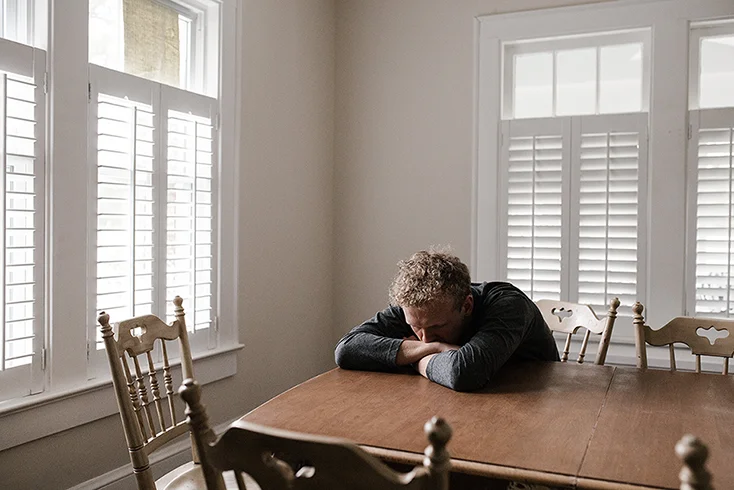
It is the worry that something like what happened in the past could happen again. Anxiety is the fear that we might experience what we experienced previously, again in the present. It might also show up as the fear that another person’s experience could happen to us. Anxiety is a physical experience our defences create inside of us, to steer us clear of what might overwhelm our nervous system.
Our Felt or Somatic Experiences Connect to our Thoughts and Beliefs
Certain experiences or sensations in our bodies are connected to certain patterns of thoughts in our brains. We feel the sensation first, then a thought or collection of thoughts follow. At times this is helpful, like when we touch a hot pan, we jerk our hand away before it gets really burned and then the thought follows, “That’s hot!!” followed by thoughts of taking care of the burn.
How our Physical Experience Reflects our Stored Memories
This process happens all day every day, something happens in the outer world or our inner world (we remember or imagine something) and we have a reaction or response to it.
As an example of what this might look like:
We see someone who looks like someone who used to bully us, and we get angry or scared. This person isn’t going to bully us, but our brain accesses the memories related to the bully, all the thoughts and beliefs about that experience, then calls up the associated physical sensations of those experiences. We re-live or re-act the experience in our bodies and thoughts. We create stronger memories, or more consistent neural pathways in our brains, when there are strong emotions related to an experience, when the fear is greater. As a survival or defensive mechanism our brains store memories of threat, at the ready to keep us safe.
Our brains also store good or safe experiences. When we build resilience, we are practicing moving from a fearful state to one of safety and connection. Secure attachment is the mechanism that provides a person with the environment necessary, to practice and then internalize their own ability to move from threat to safety.
Bodily Sensations Create our Lived Experiences of Life
Many of us like to think of ourselves as logical beings, but it’s the emotions in our bodies connected to the thoughts that create our experiences of life. We are strongly motivated by our emotions to act. It’s our experience of life or States of Being that really define our moment-to-moment reality.
Western Societies influence – Less Connection and Awareness to our Bodies Experience
Our current western society is one that is largely focused on our thoughts and ideas, and less on our physical awareness and felt experience of life. This focus on thinking has taken us away from being connected to our bodies, away from present moment awareness to what’s happening in our bodies. Like many things in life if we aren’t practiced at it, it can be challenging to do when we focus on it again.

We use our bodies less and less, as more and more of our jobs and daily activities require less physicality. We work on computers in offices; we sit watching TV at home. Greater and greater value is placed on thinking rather than feeling.
This isn’t a bad thing in of itself, thinking is powerful, but being disconnected from our bodies mean we are missing a wonderful part of our experience, we miss the juice of a life experienced through our emotions.
This disconnection increases through the bombardment with more and more stimulus through our smart phones, the internet and living in larger cities and communities. This has us less connected to and aware of how we are actually experiencing our lives, ourselves. I don’t share this to blame society, only to bring awareness to it, so that we might have a choice in the matter.
The Looping Pattern of Numbness
Many of us have become numb to our sensations. We haven’t been taught the life skills of how-to navigate our emotional experiences without becoming overwhelmed by them. We have experienced traumatic experiences or trauma over time that is rooted in scary emotions. We have learned to restrict the energy of our feelings, we don’t have some of the natural pathways for them to move, things like exercise, socializing, and feeling heard by an empathetic other.
As our internal emotional energy builds up, it becomes more powerful memories, creating bigger waves of emotion. The more the energy of our bodily sensations builds, the stronger our fear of it overwhelming us grows. The larger the emotional waves, the larger the inner walls we must create to hold them at bay.

State of Being – Reflected to us through our Bodily Sensations
Our body is our instrument or gauge of our moment-to-moment experience of life. It’s through our bodies that we define the quality of our lives. When we say we are good it’s because we are experiencing good or safe feelings or sensations in our bodies. These sensations are our internal compass for navigating life as the felt experience it is.
We determine our current relationship with everything outside us by how we feel about it. When we imagine a friend, we recall all our thoughts and the sensations associated with them. If the current theme of those memories is a positive one then we are filled with warm good sensations, and we classify it as a “good” friendship.
We could say our State of Being is the current experience we are having in our body. Or that our bodies let us know what State of Being we are in each moment of our conscious life.
Changing our Current State of Being – Will and Awareness are the Keys
As you might have experienced in the recorded experience above, we can alter our current experience by first becoming aware of our current experience, and then consciously choosing a different state of being. We can change or shift our State of Being in a number of ways. We do it all the time by what thoughts we focus on, by the music we listen to, how we breathe, and through our choice of how we want to feel.
If you focus on something upsetting from your past, chances are you will experience the sensations connected to that upset. This happens all the time subconsciously, however we can start to do it consciously. First, we become aware of what we are currently experiencing, then from that state of awareness we can shift to another State of Being, or another experience of life. We use our Will to direct our attention or awareness in the way of our choosing.
I am not suggesting that we can, or should force ourselves to feel a certain way. The State of Awareness isn’t a forceful State of Being. The less our emotional energies have built up within us, the more easily we can use our awareness to shift into other States of Being. The less emotional baggage and unsupportive beliefs we have, the more peaceful our inner experience is.
In a way this is very simple way to consider somatic based therapies. The smaller our inner energetic walls are, the more easily we can consciously choose our current State of Being.
Titration – Letting the Build Up of Stored Fear go Safely. Letting Some of Air out of the Ballon
In therapy the term we use for the gradual or partial experiencing of built-up emotions or sensations is titration. We titrate our emotions so they don’t overwhelm our nervous systems. When our nervous systems become overwhelmed, they shutdown to protect the system. This shutdown is a good thing when we are faced with a physical experience that threatens us, it’s a survival mechanism sometimes called fawning. It’s like our life support system that redirects energy to our critical systems, in the event of an emergency.
Before we reach the point of being overwhelmed, many defences or coping mechanisms activate to lessen or reduce the amount of energy we are feeling in the body. These defences can take the form of any of the emotions that take away or distract us from experiencing the current intense emotions that are “too much”. Anxiety is a way we disperse emotional energy enough for our systems to handle it in the moment.
Titration is like slowly Deflating a Balloon
As we feel some of our emotional energy and bring awareness to the thoughts and sensations associated with it, we reduce the amount of built-up energy. I often describe this as slowly letting air out of our emotional balloons. As the balloon deflates, there is less energy trying desperately to escape, less force that we need to hold back.
We take control back of our inner experience through our awareness, through calming our nervous systems, and through bringing safety back into our internal experience. As we reduce the amount of emotional energy we are holding inside, we require less energy to constantly resist it. As we become more calm or at peace internally, the more inner energy we make available for other things.
An Example of how past fearful Experiences are still Affecting Us
Here is a brief example of how our body might communicate an unresolved fear from our past:
When I talk back to Dad, he gets angry and raises his voice, I feel scared. My body is filled with the experience of fear or terror. I might get a sinking feeling in my stomach, a cold chill come over my skin, or feel weak in the presence of men, or men that remind of Dad. I start to associate thoughts and then entire belief systems around this fear in my body.
As a child it might start as thoughts or the belief that “Dad is scary”. From there “Dad is scary” might become “I need to be a good girl so Dad doesn’t get scary” or “I am a bad boy or girl when I say something that makes Daddy upset.”
As children we tend to view things as our fault, we relate everything we experience in relationship to what we do and feel. We haven’t yet built the concept of others and how we relate to them in our internal models.
As we get older these beliefs can shift into beliefs like “I need to be a good wife to my husband because then he won’t get mad and I won’t get scared”. It can also take the form of beliefs like “Men are bad” or “Men are dangerous”. If I am a Man, I might take on the belief that “As a Man I am bad or dangerous”. These can also take the forms of “I am bad” or “Anger is scary or Anger is bad so I’m not going to ever let myself feel angry.”
We might also take on beliefs around anger, like “I shouldn’t get angry so I don’t scare others.” We then will find ways to avoid ever feeling anger, we build up bigger and bigger walls around expressing or experiencing anger in our bodies. Along with these energetic walls we create mental strategies, in the forms of beliefs and mental models, as well as behaviors to keep the strong emotions at bay.
Our internal beliefs and stuck emotions become the colored glasses we see all our experiences through. If we have a memory but there isn’t a strong emotional connection, we generally don’t recall it as our system has deemed it unimportant to our survival, or system of safety and connection.
“It’s like wearing glasses made of our emotions and beliefs that filter all our experiences.”

A further confusion can come about because as much as we fear feeling anger in ourselves, another part of us learned through examples growing up that anger is a good defense or way to avoid feeling fear. We learn through the examples set by those we deem as knowing better than us, our parents, our older siblings and other’s we deem as wiser. I describe my experience with anger which reflects this in my article called “My Personal Experience with Anger – Calming the Monster Within”.
This is how psychological defences are created. We might create a defence to “Dad is scary” by hating or being upset with men, or with anyone that expresses anger. Our brains and nervous systems associate the experience of anger with the experience of fear in the body. Those memories in our bodies are still there and we re-enforce or create all these thoughts (reasons) that Men or people that express anger aren’t to be trusted, that we aren’t safe when we find ourselves in those experiences.
All of this being said, it’s important to recognize the very real unhealthy realities present in our societies. There have been a lot of men who weren’t safe, there continue to be men that aren’t safe, this fear is an important safety and survival mechanism to keep people safe. We can come to peace internally with our past, while retaining the wisdom it provides us to make smart decisions to keep ourselves safe. This way we free ourselves from the constant fear, yet retain the practical wisdom that keeps us physically safe.
The Transformational Power of Safety Felt in the Body
Therapists who practice a bottom up or experiential type of therapy will have you experiencing the physical memories of your past experiences in your body. They will do that in many different ways, by slowing you down, having you stay with your current experience in your body. What many therapists offer that you didn’t have at the time of those past events, is safety. When we re-experience a past experience in a new way, a safe way, that has the potential of rewriting your neural pathways, of disconnecting the fear you have associated with those memories and rewiring it to be associated with safety.
Additional to the safety, you are no longer the same person you were when the original upset happened; chances are you are more resourced within yourself now. Your brain and nervous doesn’t automatically understand this, but you can teach it that you aren’t in the same danger you felt you were in the past, that you can internally keep yourself safe, unlike you could in the past.
Often the reason we create these defensive reactions to past events, is we felt alone in making sense of them. Safety provides a container for us to allow the emotional energy of trauma or upset to complete itself or naturally process itself. When we were children, we didn’t know how to feel safe on our own. The safety created by a secure relationship with an emotionally mature adult provides a child with the external reinforcement necessary to build the internal skills of processing emotional energy. Much of the emotional energy experienced as a child is able to pass through without becoming stuck. With safety a child learns to regulate their own nervous system.
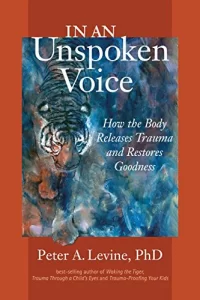
Peter Levine, the founder of Somatic Experiencing, talks about his own traumatic experience and the safety created by a passing doctor. Her calming safe presence allowed him to release the energy built up in his body, he describes this experience in his book “In and Unspoken Voice”. I highly recommend that book if you are interested in this topic.
It becomes even more confusing when our fearful memories are related to those “mature” adults that we looked to for safety. We come to fear those who were meant to protect us, we innately know we should find safety in them, which contrasts with the felt or lived experience, with the experience we actually had.
The Beauty and Power of our Emotionally Felt Experiences
I never intend to imply that we want to wipe out all our emotional experiences. We experience the beauty of life through our felt experiences. It’s a gift of being human. To feel the joy of accomplishing something or helping someone, the gratitude of being alive are what make life worth living. The joy and warmth we feel when we connect with others can be extraordinary wonderful.
I encourage you to make peace within yourself, so that you aren’t at the mercy of your unresolved past. So that you can respond rather than react. The more resolved we are within, the more choice we have in the way that we respond to what happens to us. To respond is different than to react. To react is to act out again a previous experience in the present moment.
For example, when we are outraged by an injustice and react to it, we might go around telling everyone how pissed off we are about it, how unfair it is. In that State of Being we can’t think as clearly as we could if our nervous system was regulated. If we were to respond, instead of react to the injustice, we might identify some actions to take that would help the people affected by the injustice. When we respond we are motivated by our emotional experience, but are able to create solutions rather than staying stuck in our emotional experience. We can come from a place of caring, rather than a place of fear and upset.
What Use is Being more Aware and Connected to our Bodily Experiences
When we feel less fear, we can think more clearly, which leads to more awareness of our State of Being. It’s a circular experience, the more our bodies are calm, the more we are able to become aware of our beliefs and thinking, and decide if they serve us or they don’t. As we become more aware of our thinking, we are able to change our thinking which leads to less thinking that triggers upset in our bodies.
The more peace we have within ourselves, the more able we are to enjoy life without being thrown around by all the different situations that we are faced with every day. As much as we want to only feel the good feelings, we can’t consciously decide our State of Being when we are strongly influenced by the energies of our negative emotions. We will never be completely free of negative experiences in life, but we can learn to navigate them in ways that maintain much of our inner peace and core self. We do this through experiencing our emotions in new ways, calming our nervous systems, and creating new inner models of relating to our inner and outer worlds.